Electrode boilers are electric boilers that use electricity and water conductivity to generate steam or hot water.
The boiler is filled with treated water (with controlled conductivity). Unlike standard electric boilers that use resistance elements, the electrode boiler passes electric current directly through the water between electrodes and counter electrodes.
Inside the pressure vessel, electrodes and counter electrodes are either immersed in the water or sprayed with water depending on the technology. When voltage is applied across these electrodes, electric current flows through the water.
Heat is generated when an electric current passes through a conductor, water in our case. This effect occurs due to the resistance encountered by the current, leading to an increase in the conductor's internal energy and temperature.
In steam boilers, water boils and vaporizes, and the steam is collected in the upper part of the vessel. In hot water boilers, the shell is fully filled, and the water heats up to the desired temperature without changing phase.
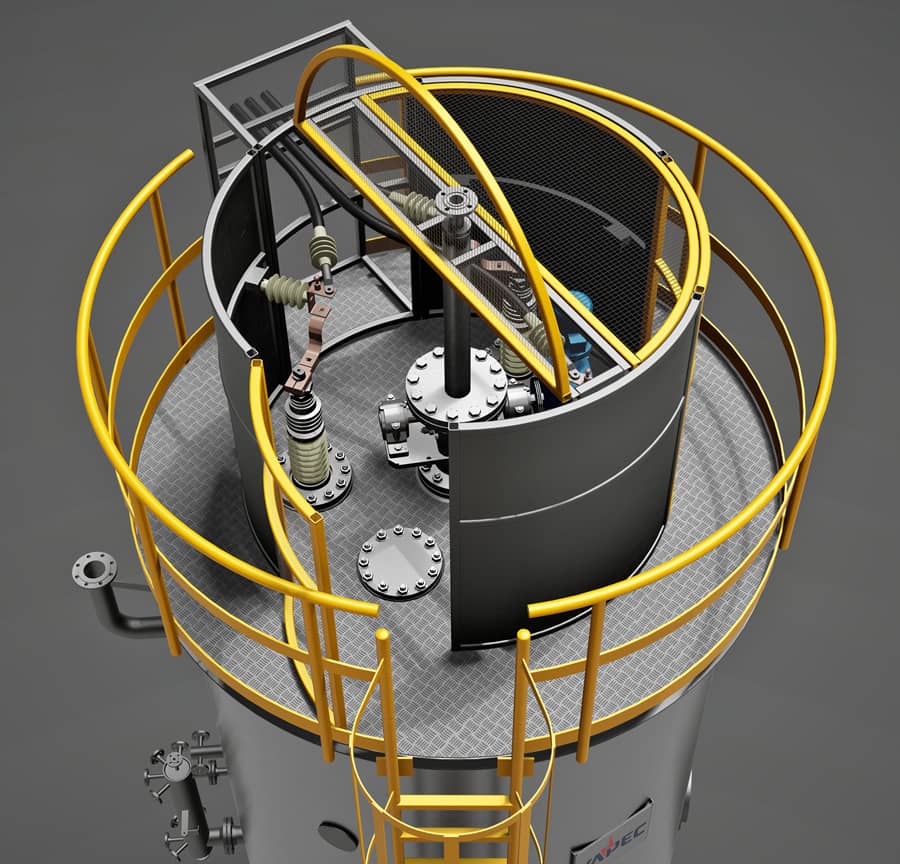

As the heat is generated by the Joule effect, no combustion is required and therefore no smoke is emitted.

0-100% for jet type electrode boilers
10-100% for immersed electrode boilers

Nearly 100% efficiency, losses limited to radiation from insulated walls.


Thanks to a vertical installation, an electrode boiler has a very small footprint (30 m² for 90MW)

When ‘Power to Heat’ or ‘Grid Balancing’ mechanism can be applied, return on investment can be less than 24 months!

