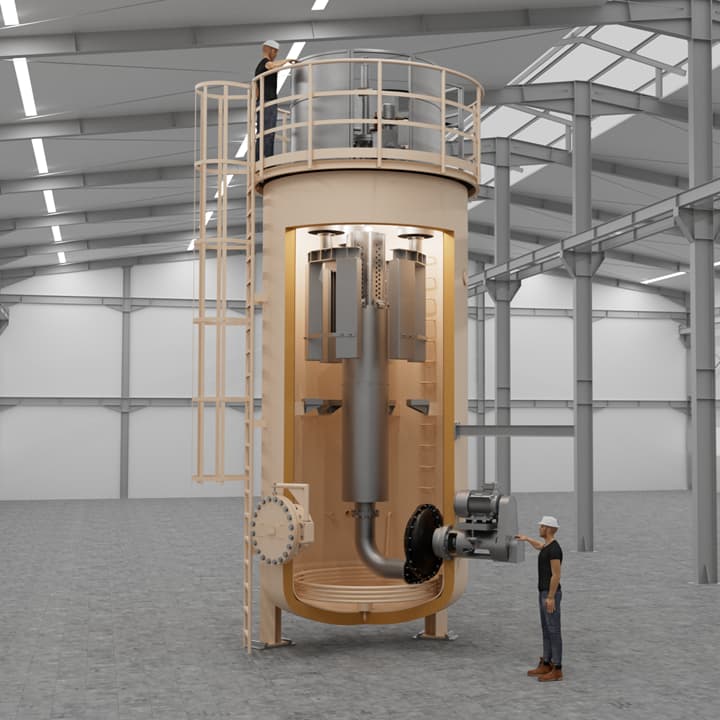
Jet type boilers only produce steam. The electrodes are sprayed with water by the central column, and a regulation tube or mask moves up or down depending on the power required to cover or uncover the jets.
The boiler has a current intake for each phase; each connected to a group of one to three electrodes. Each electrode is associated with its own counter-electrode.
The pump(s) circulate a constant flow of water from the lower part of the shell to the associated electrodes and counter-electrodes via the central column and through nozzle plates. The water circulating between the central column to electrode and its counter-electrode heats and vaporizes thanks to the Joule effect. The position of the regulation tube or mask is determined by the power required :
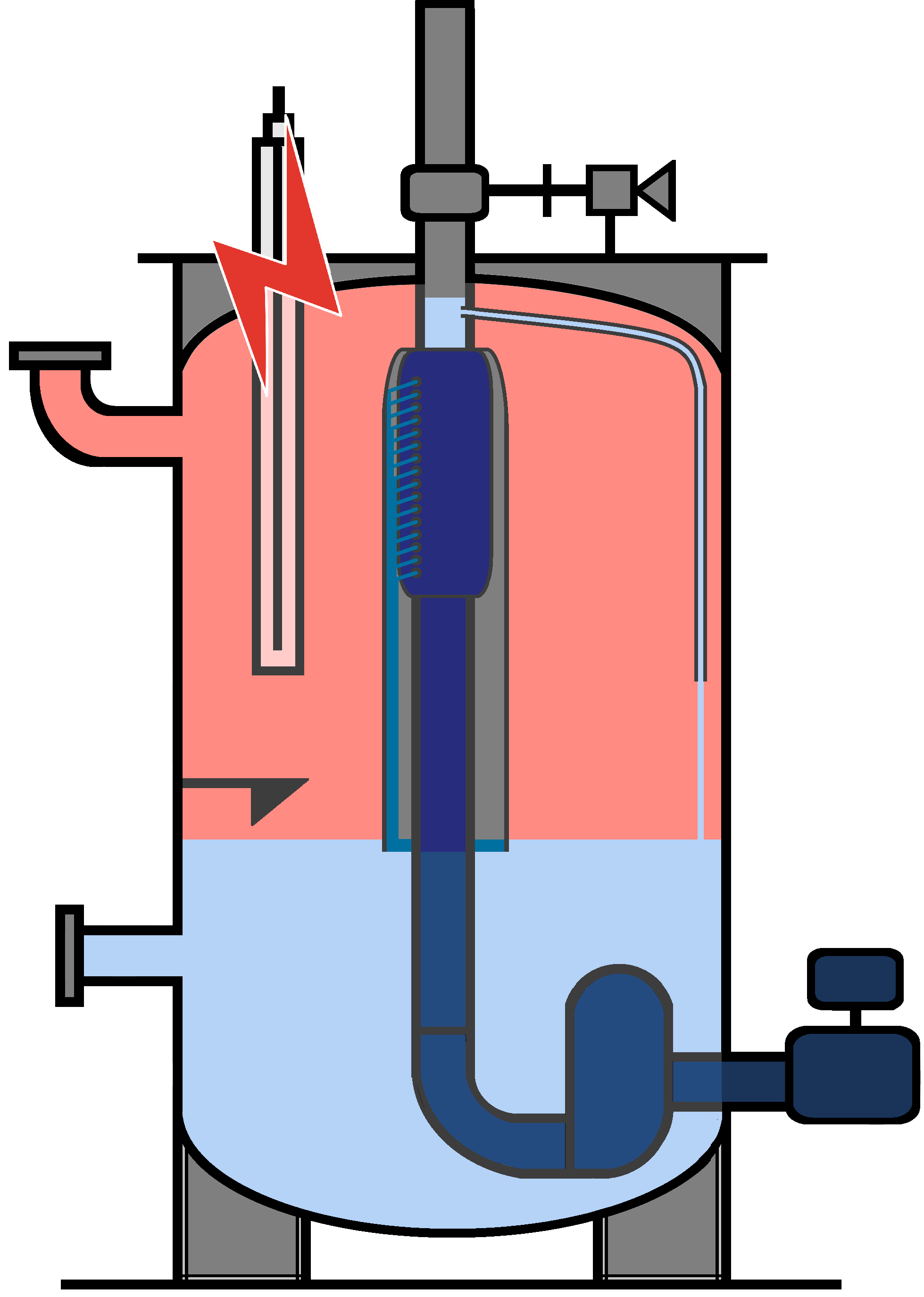
The regulation tube is in the highest position, the water jets are blocked, and the water is returned to the bottom of the boiler. Electricity cannot flow through water, so there is no Joule effect.
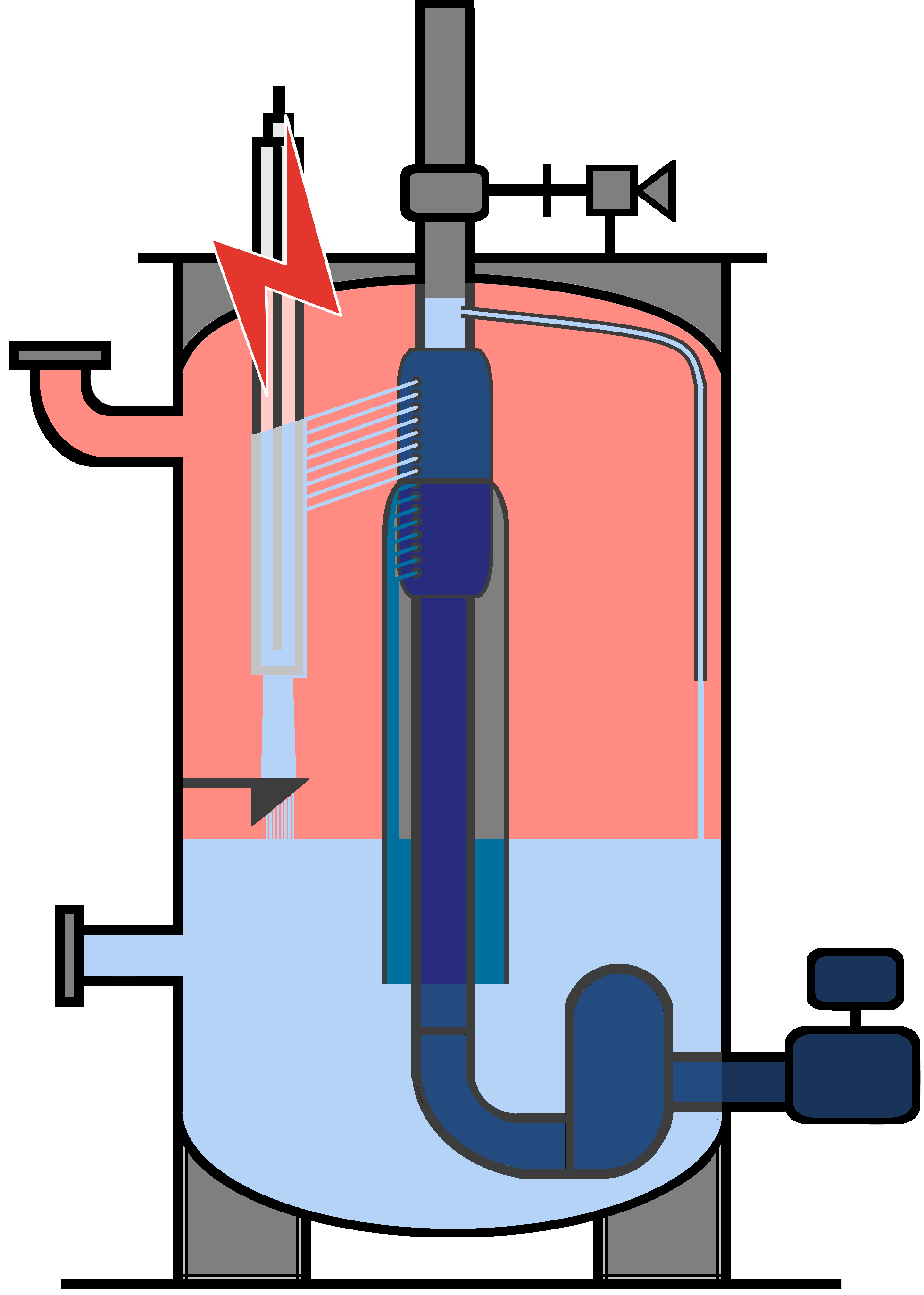
The regulation tube is at the middle position, masking 50% of the water jets from the electrode and counter electrode , therefore about 50% of the electricity can flow through the water allowing Joule effect and heat.
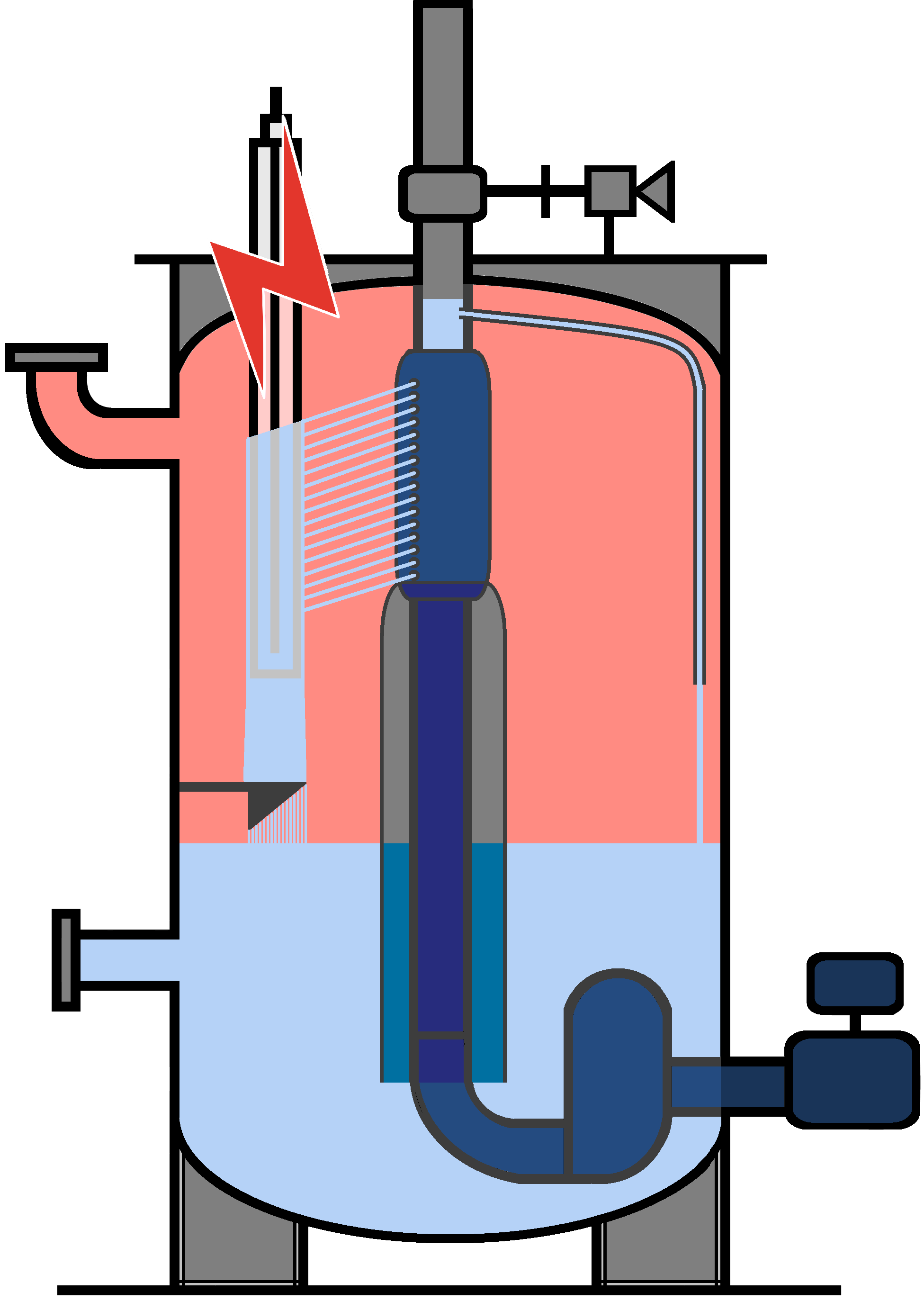
The regulation tube is at the lowest position, all the water jets can reach the electrode and counter electrode , therefore all the electricity can easily flow through the water allowing maximum heat.
| DESIGN | JET TYPE | |
|---|---|---|
| MEDIUM | STEAM | |
| MAXIMUM CAPACITY | 90 MW | |
| INPUT VOLTAGE | 6 - 36 kV | |
| OPERATING PRESSURE | 8 - 28 barg | |
| BOILER WATER CONDUCTIVITY | 2 000 - 5 000 µS/cm | |
| STEAM QUALITY | 99 % | |
| MODULATION RANGE | 0 - 100 % | |

